OceanCitizen — WebGL Marine Point-Cloud Platform
January 2023 | Client: Ubica
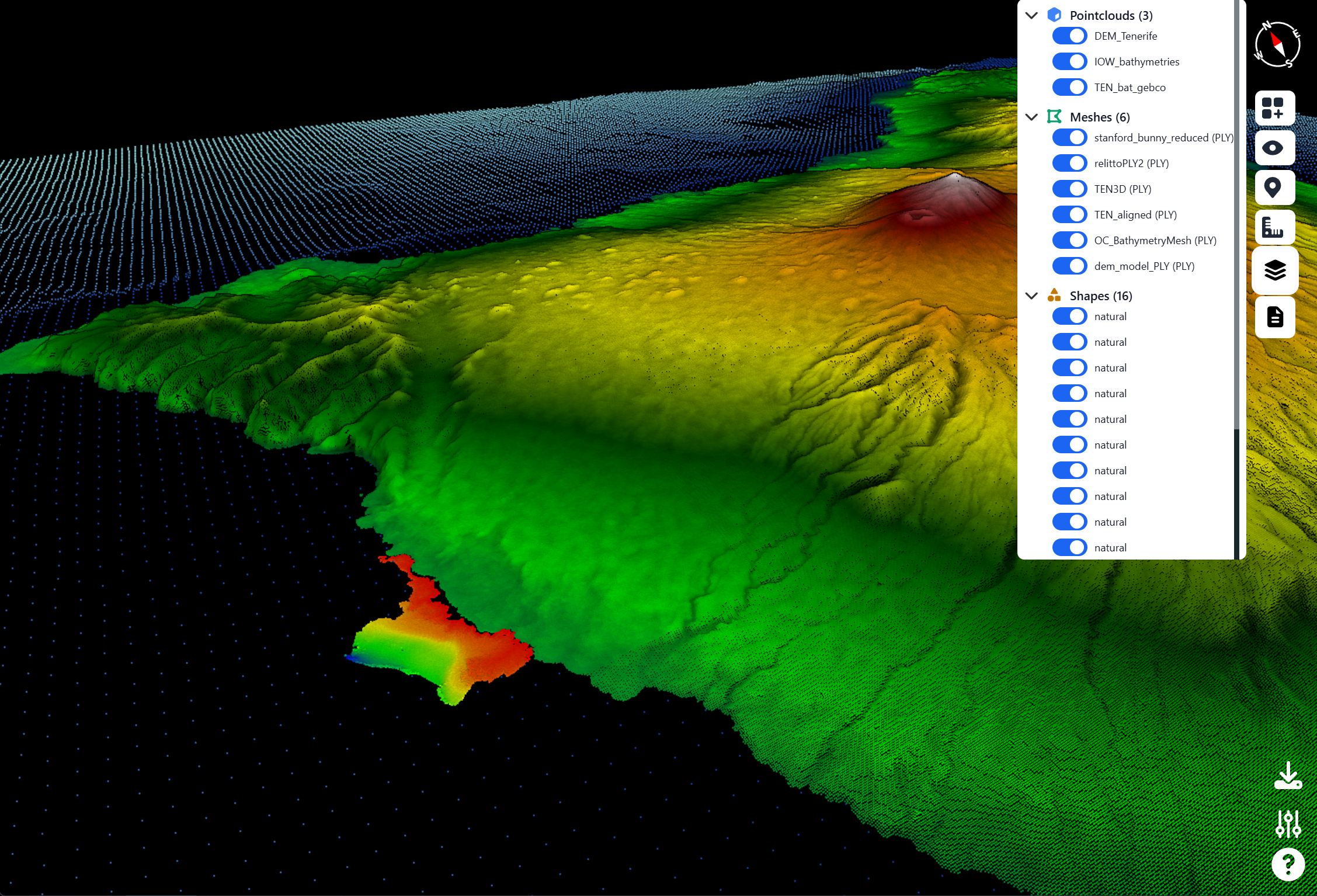
OceanCitizen is an industrial web application for browser-based 3D visualization, measurement and documentation of offshore and marine assets, including rigs, vessels, subsea structures and work sites. Built around a customized Potree WebGL viewer and a Laravel/Backpack backend, it lets users inspect large point-cloud datasets and meshes without installing specialist desktop software.
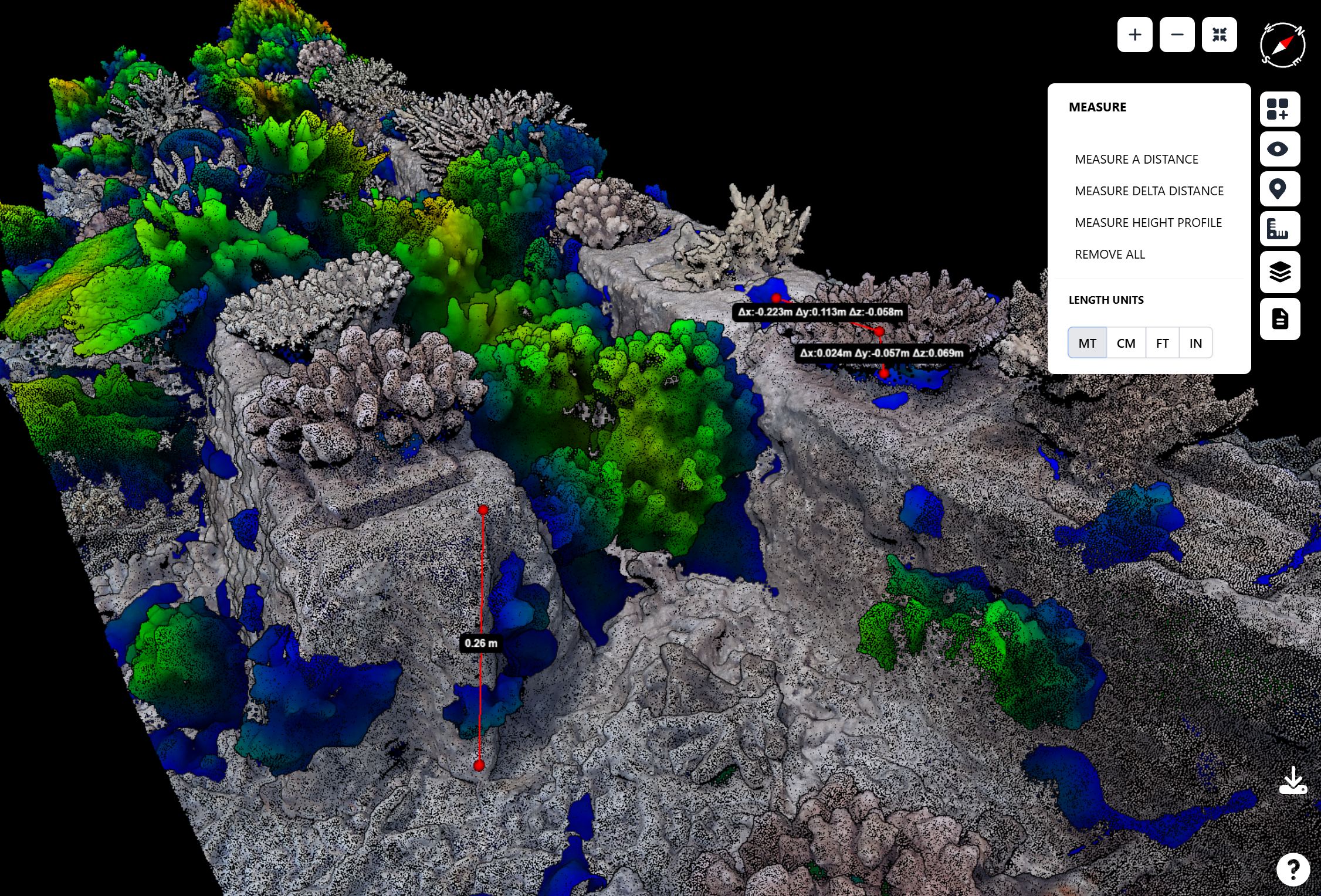
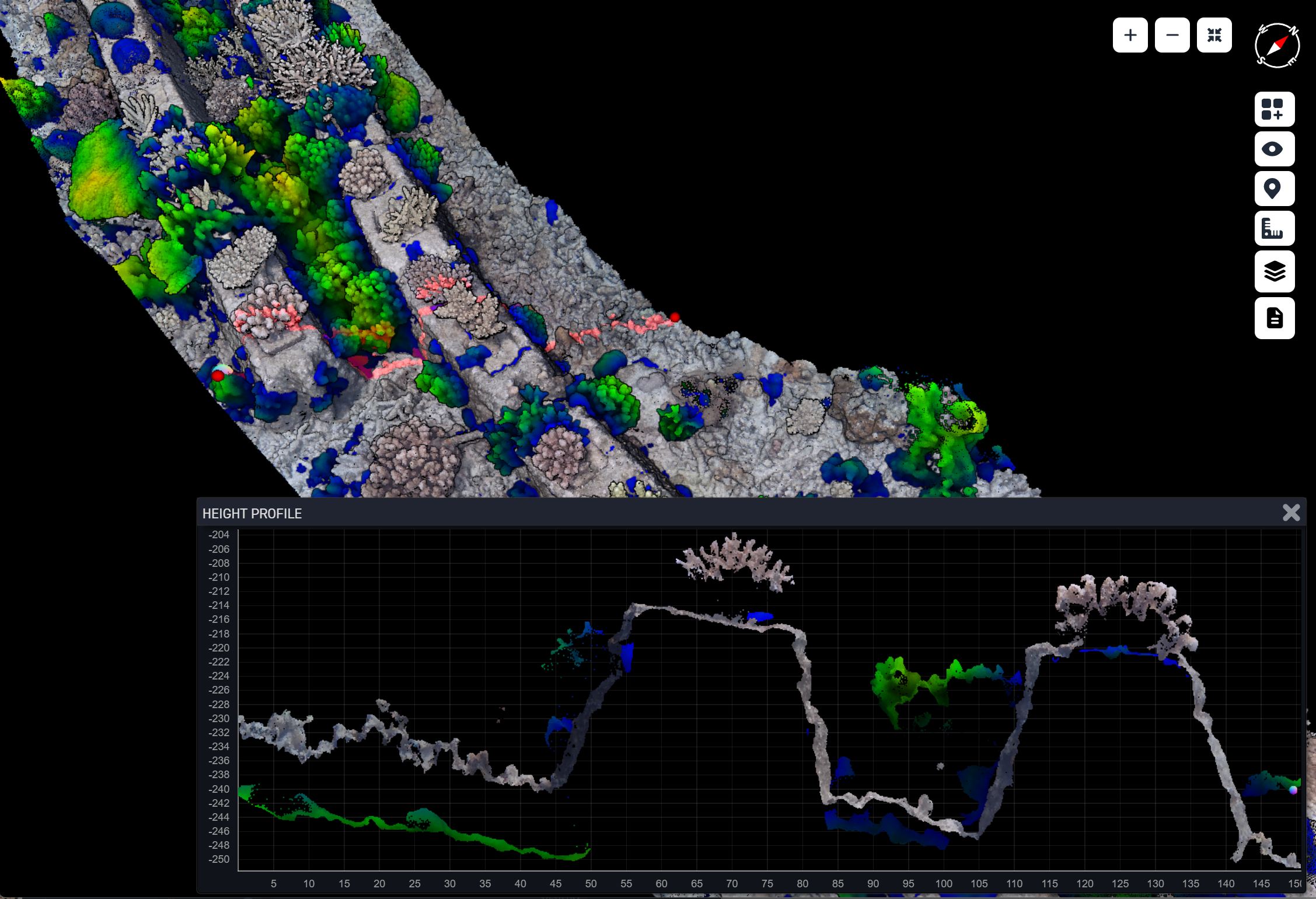
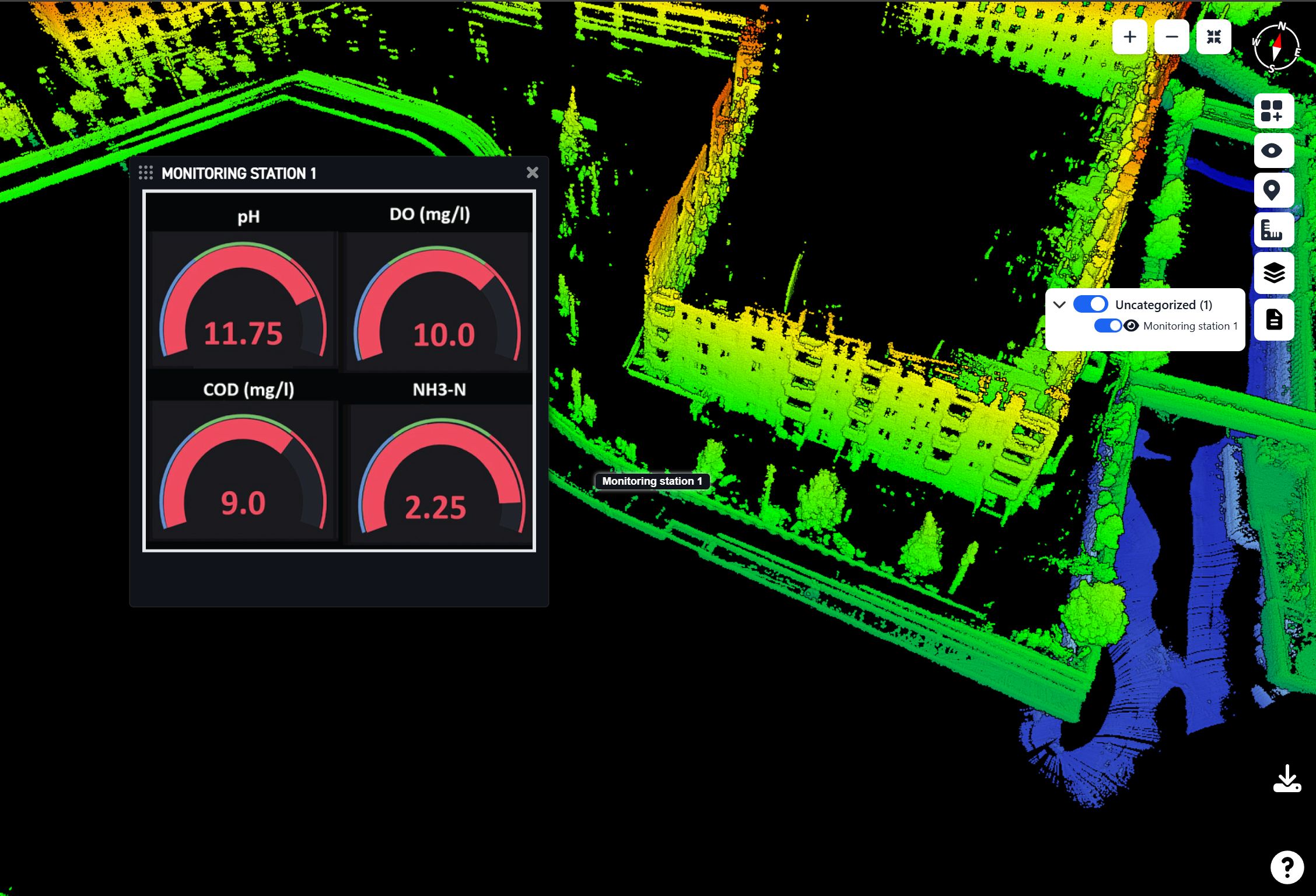
The viewer is more than a scene renderer. Users can switch datasets, toggle point clouds and meshes, adjust opacity, navigate global coordinates, apply units and scale, and measure distances, height profiles, areas and deltas. Measurements can be exported as CSV or JSON, while XYZ annotations attach observations to precise locations in the scene. Project documentation and scene-object controls keep the visual review connected to the information needed to interpret it.
I worked across the Laravel backend, Backpack administration and the customized Potree frontend, coordinating project-based access, authenticated viewers, public presentation viewers, dataset management, documentation pages and annotation workflows. The platform also includes chunked upload handling and an audit trail recording access context such as user, IP, GeoIP data and user agent.
The central engineering challenge was keeping a WebGL-heavy interaction useful and responsive while connecting it to permissions, administration and domain documentation. OceanCitizen therefore treats the point cloud as part of a managed project workflow: the browser is the inspection surface, while the backend controls who can access each dataset and how the review is documented.
Gallery